
by Stephen Patch (age 15)
“Liar, liar, pants on fire.” Who hasn’t heard the famous children’s taunt? While very comical, it brings up an important question. While we needn’t fear combustive clothing, can lying bring pain in other ways? Does lying even work? Most definitely not! Lies and deception don’t help anyone at all. On the contrary, lying certainly causes you many painful experiences and burns relationships. Furthermore, deceptions of any kind are notoriously unstable and are bound to fall apart, leaving the liar with egg on his face.
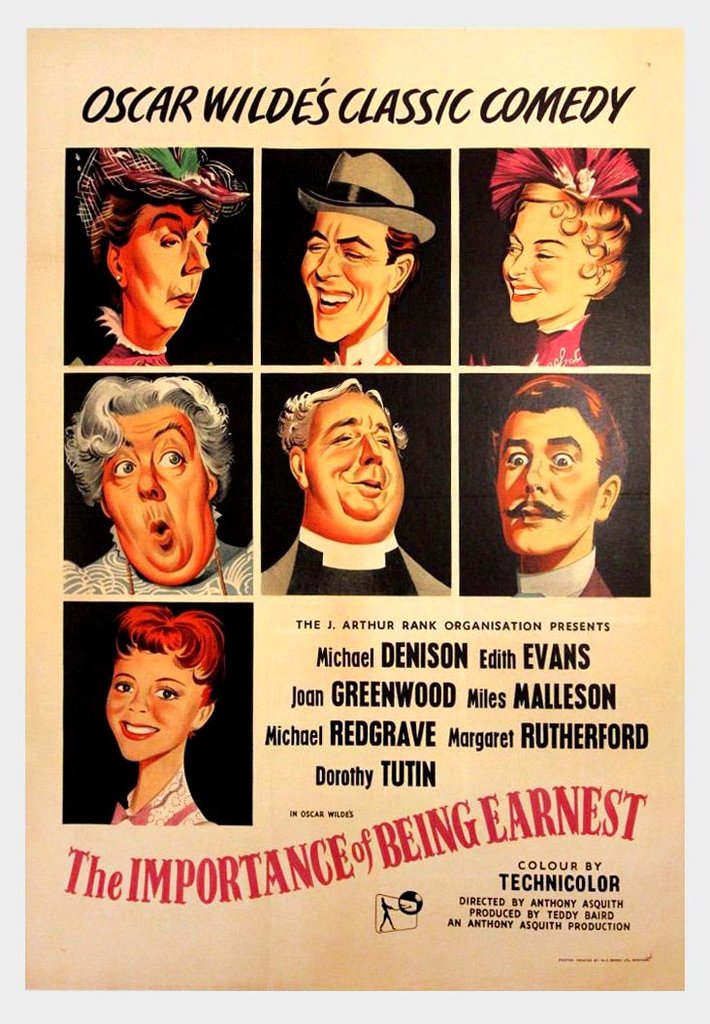
However, don’t just take it from me. Instead, to ensure unequivocal certainty, we shall consult the aptly named play, The Importance of Being Earnest, written by Oscar Wilde. Wilde is an outright critic of society and an incredible master of humour who plainly establishes the many dangers of deception in his famous play.
In addition, and most importantly, the Holy Bible will give us the final decisive word on whether we should use deception.
Firstly, deceptiveness ends up hurting you when you use it. In the second act of Wilde’s play, Jack, whose deception has just been discovered, laments, “it is very painful for me to speak the truth” (Wilde, 2000, p.48). The irony is, of course, that if he had always told the truth, it wouldn’t hurt! Moreover, after Jack confesses, he calls the whole situation, “a ghastly state of affairs” (Wilde, 2000, p.48). This definitely shows how deception leads to embarrassing and painful confessions.
Further evidence of deception inflicting personal pain is shown when Jack denies his consent to Algernon’s engagement. He declares that Algernon’s “disgraceful deception,” which succeeded in “alienating the affections” of Jack’s ward, is grave grounds to doubt his character (Wilde, 2000, p.57). Algernon’s lies have come back to bite with great ferocity, as Wilde shows with outstanding use of alliteration. Clearly, deception hurts dreadfully. The Bible states this candidly, saying, “A false witness will not go unpunished” (Proverbs 19:5, NIV). Consequently, lies and deception will undoubtedly hurt you when you use them. Indeed, deception hurts others as well.
Second, while not burning your pants, lies will certainly burn your relationships. For example, after Algernon uses Jack’s lies to stage a deception, Jack tells Algernon his fake friend “has quite exploded” (Wilde, 2000, p.48). This metaphor evidently highlights Jack’s bitterness and anger toward Algernon, his ‘friend’. Their relationship is most obviously a casualty of confusing deception. Again, Wilde uses irony and satire to display great dislike between Gwendolen and Cecily (2000, pp. 44-45). Just two pages prior to this, they are “great friends” (Wilde, 2000, p.41). Now they are divided because of Jack and Algernon’s lies.
Another painfully clear example is of Gwendolen and Jack’s relationship. At first, Gwen has great faith in Jack, stating that he “is the very soul of truth and honour. Disloyalty would be as impossible to him as deception” (Wilde, 2000, p.43). However, after she discovers the truth of his many lies, she has “the gravest doubts” that he is telling the truth. Wilde’s skilled use of potent description easily shows the damage lies do to relationships. Put concisely, “A dishonest man separates close friends” (Proverbs 16:28, ESV). Evidently, lies do great damage to fragile things like relationships. However, possibly worst of all, lies won’t even last, and will end in a most embarrassing mess.
So finally, lies will consistently crumble and fail you like burnt fabric. This is demonstrated when Jack declares that his fake brother, Earnest, is dead, but Cecily tells him, “Your brother Earnest arrived about a half hour ago” (Wilde, 2000, p.34). Algernon has hijacked the fake character and Jack is left looking “perfectly absurd” and as if he’s got toothache (Wilde, 2000, p.34). Wilde’s clever use of comic emphasis and simile here highlight how incredibly stupid Jack looks when his lie fails. Furthermore, when the surprised Algernon is asked about his fake friend, he answers “[stammering] Oh! Bunbury is somewhere else … in fact, Bunbury is dead” (Wilde, 2000, p.54). This is incredibly ironic because Algernon said he would never get rid of Bunbury (Wilde, 2000, p.11). So Wilde leaves us with no doubt: lies fail.
In fact, the pain and damaged relationships that we have already observed are simply symptoms of failed deception. Again, the Bible concisely summarises this key fact: “truthful lips endure forever, but a lying tongue lasts only a moment” (Proverbs 12:19, NIV).
In conclusion, it is scorchingly clear that lies won’t last. Lies and deceit only hurt, divide and fail. On the contrary, “truth shall set you free” (John 8:32, NIV). Deception is obviously detrimental. Oscar Wilde has masterfully revealed this in his comedy, The Importance of Being Earnest. He clearly shows that lies come back to bite, burn relationships, and never last very long, making the liar look very foolish. However, don’t think the truth is always easy. It’s not. Yet, it is unmistakably evident that lying is the worst choice.
Thus I urge you not to bring unnecessary pain and embarrassment upon yourself. I urge you not to burn your invaluable relationships. I urge you to heed the words of God himself and, “[t]herefore, speak truthfully to your neighbour” (Ephesians 4:25, NIV). As a consequence, I know that you will discover “the vital Importance of Being Earnest” (Wilde, 2000, p.64).
Bibliography
The Holy Bible, New International Version. (2011). Zondervan.
The Holy Bible, English Standard Version. (2016). Crossway.
Wilde, O. (2000). The Importance of Being Earnest and Other Plays. London: Penguin.
 Word Oysters